A/B Testing: Goals & Attribution
How Zolvio decides which variant “gets credit” for a conversion.
Core Concepts
- Exposure: the visitor was assigned a variant for a test
- Conversion: the visitor completes a goal (click, add to cart, checkout, purchase)
- Attribution window: how long after exposure a conversion can be credited
What Decides the Winner
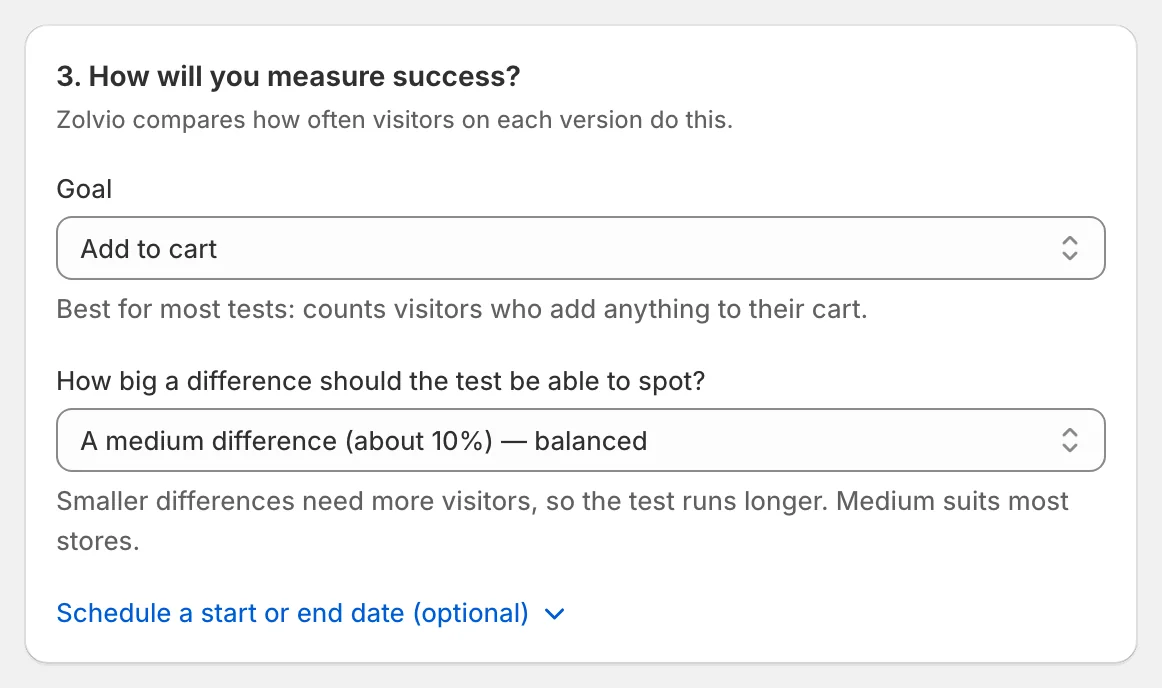
Tests are decided on the conversion rate: the share of visitors who complete the goal. On a purchase goal you can choose Revenue per visitor under What decides the winner instead, for changes that could alter what people buy or how much (bundles, upsells, prices shown). It needs at least 20 orders on each version, so it takes longer.
Revenue is the order’s merchandise subtotal after discounts, before shipping and tax, in your store’s currency. Test orders (Shopify’s Bogus Gateway or a test-mode payment) aren’t counted.
Attribution Windows
Typical windows:
- Click: short window (minutes to hours)
- Add to cart: short-to-medium window
- Checkout: up to a couple of days
- Purchase: up to a couple of weeks
Why windows matter
What “Confidence” Means
Confidence is a statistical estimate that the observed lift is not due to randomness. Avoid stopping tests early — it increases false positives.
Next
To target experiments (device type, UTM params, etc.), see Targeting.